From The Ground Up
A full introduction to the course where you'll discover all the content we're about to tackle, how you should approach the course.
Diamond 1 is the foundational diamond, the one that reshapes your understanding of the core ideas that lie within composition and archviz. Misunderstanding the foundation of your own industry can lead you to focus on the wrong things.
I'll address the semantics: what is a rendering? What's going on with photorealism? I'll also lay the foundation of an actionable definition for "composition", turning it from a vague concept into a practical tool.
Perception itself is frequently misunderstood and oversimplified. The act of perceiving is fundamentally shaped by cultural differences, personal memories, and the physiological quirks of your own body.
I'll explore the power of contrast, Gestalt psychology principles, and the fundamentals of visual hierarchy. This gives you the keys to understand visual weight and tension, the dynamics inside your compositions.
"Just make it look good." But looking good and being effective are completely different things. The difference between a beautiful image and one that moves your client comes down to intent.
I'll uncover the true meaning of intent, its four hidden layers, clarify the limits of storytelling, and tackle how to rip apart the brief during your very first client meeting.
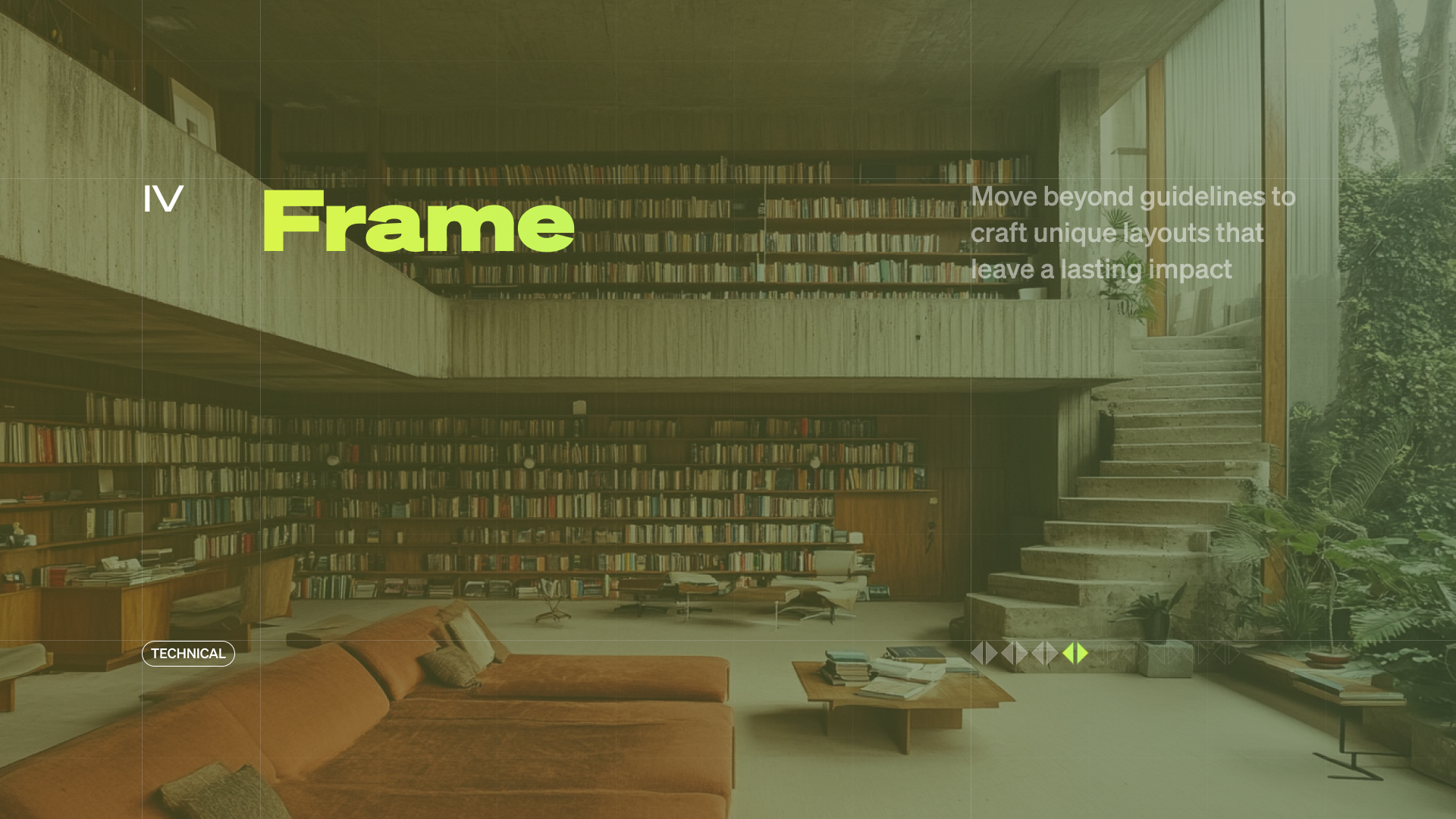
Most people think framing is about finding a good angle. It's not. Framing is about perception. It's not about grid systems, plotting elements, or other oversimplified approaches.
I'll break down aspect ratios, camera placement, focal length, depth of field, negative space, the rule of thirds (overrated), golden ratio (fancy but useless), and dynamic symmetry (actually useful).
Lighting makes or breaks the shot. Light is the invisible hand that shapes everything. It defines depth, guides attention, creates mood before a single material even registers.
I cover light and shadow equally, photography setups, natural vs artificial light, atmospherics, texture legibility, smart material libraries, light matching, and AI-generated custom skies.
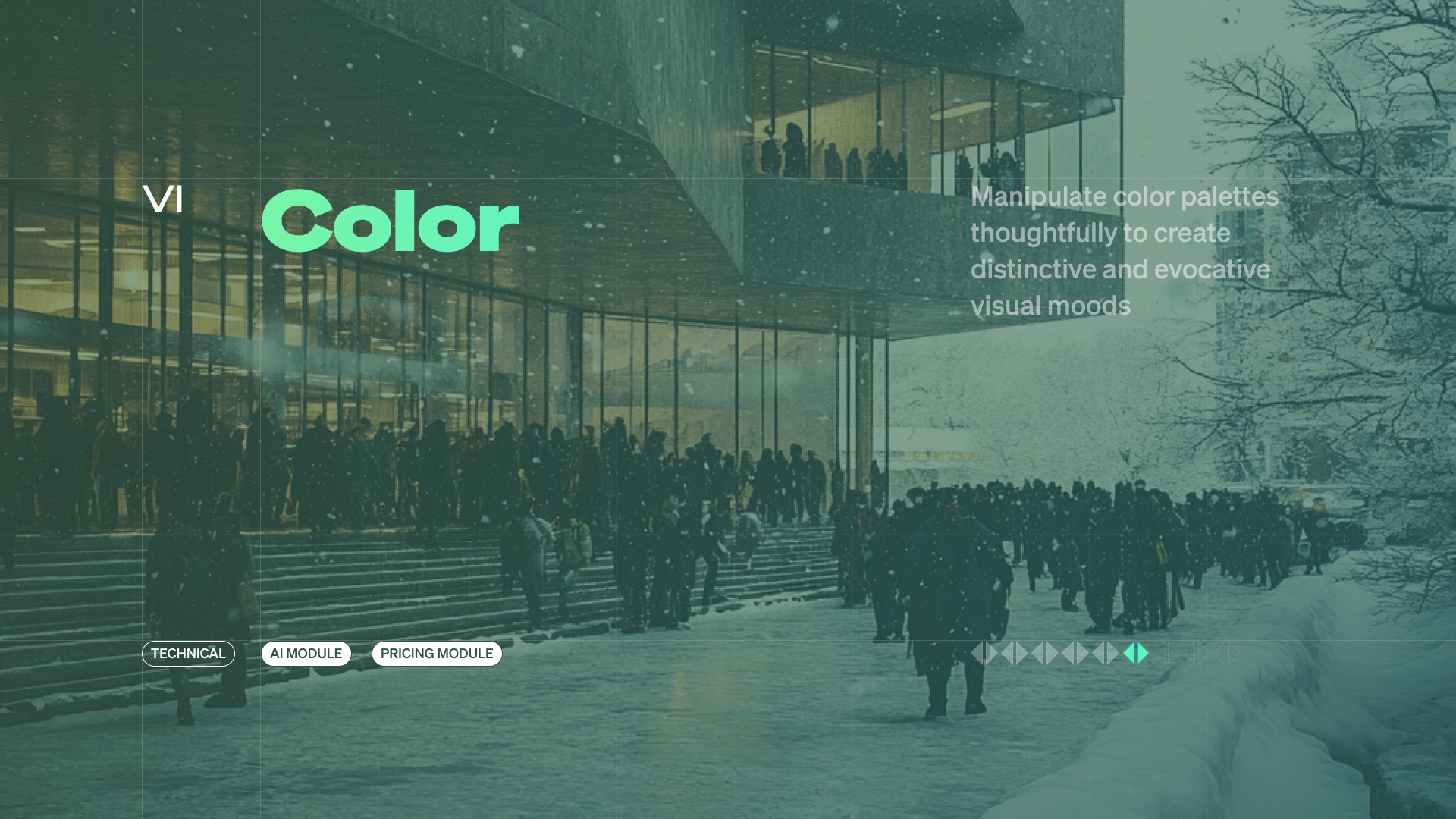
Color is the final core component of composition. Not because it's less important, but because it's the last thing you adjust. Get it wrong and it ruins the equilibrium. Get it right and everything clicks.
I start by imagining a world without color, explore Itten's framework, map color styles, then reverse-engineer palettes, build cohesive schemes, and leverage AI for seasonal variations.
Good ideas don't just fall on you. Creativity isn't talent you either have or don't. It's a skill you can nurture through mindful observation, experimentation, and questioning the status quo.
I explore where creative thinking comes from, the two essential tools (references and the repertoire), the Learning From The Masters series, and practical strategies for developing your personal style.
"Just make great work and clients will come." That advice is wrong. Talent without business sense is a recipe for failure. Your skills are only half the equation.
From 10 hard-earned lessons to pricing strategies, contracts, client management, cash flow, productivity, and running a one-person studio. This diamond turns artists into professionals.
The complete production pipeline, from brief to final delivery. Open source tools, AI integration, and workflows that scale without compromising quality.
A full project walkthrough: ideation with AI, 2D/3D exploration, moodboarding, reference interpretation, scene debugging, culling, contact sheets, postprocessing automation, and final delivery.